
CLW / Blog
Exhauster Truck Sizes: How to Choose the Right Tank Capacity
Work from your collection route and legal payload to shortlist the right exhauster tank and chassis.
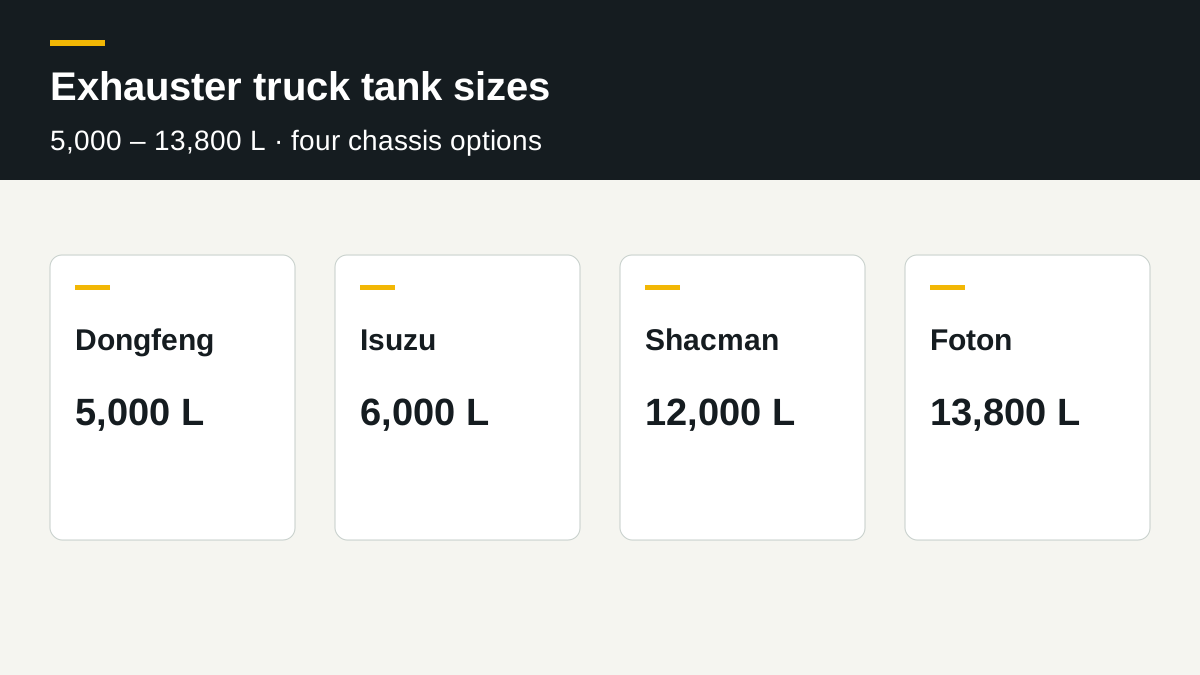
For short collection rounds with a nearby discharge point, start with a smaller tank and a chassis that can reach the site. For regular town rounds, the 6,000 L Isuzu is a useful size to compare. For longer trips to a treatment plant, consider the 12,000 L Shacman if the route and legal payload allow it. The four trucks compared here span 5,000 to 13,800 litres in tank capacity, with vehicle starting prices from USD 16,000. In Kenya this truck is often called a honey sucker.
Three factors decide the tank size
1. How much do you collect each shift?
Use the busiest routine shift and the largest stop you need to complete without leaving halfway. A household septic service can make several small stops before a discharge run. A pit latrine job can take longer if the material is thick or contains debris. A construction camp may have a predictable collection schedule but a large single collection on its busiest day. Log the volume actually removed at each stop and the time your crew spends there.
Keep the average and the peak separate. The average helps you plan ordinary rounds. The peak tells you whether an extra trip or vehicle is needed. If you serve both households and camps, group the jobs by route before adding the litres together. A daily total on its own cannot tell you whether the loads can be combined.
2. How far do you drive to discharge?
Give tank size more weight as the discharge leg gets longer. A larger usable load can save a trip when the treatment plant is far from the last collection stop. With a nearby discharge point, smaller loads may be practical because each extra trip costs less driving time. Use the route the truck actually takes, including detours and the return leg, rather than the distance on a map between two points.
3. Can the truck reach the job and travel loaded?
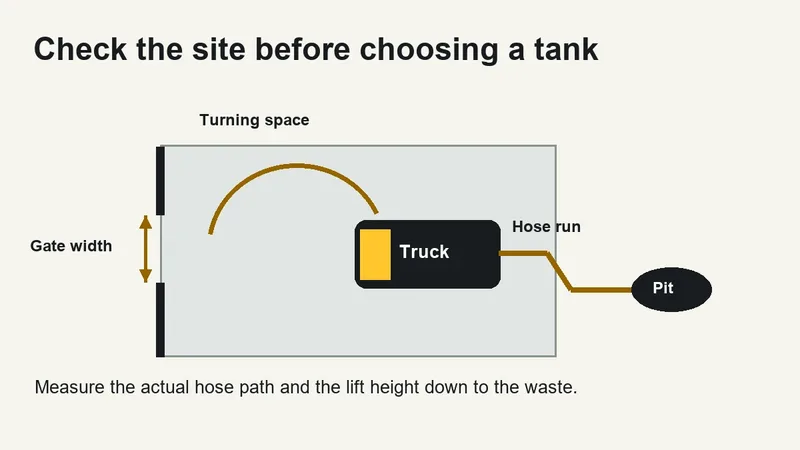
Measure the tightest access before choosing a chassis. Note gate width and height, the space needed to turn or reverse, the surface near the pit and where the crew can park safely. Include any bridge, axle or road weight limit between the stop and the treatment plant. If the truck parks away from the pit, measure the actual hose run around walls and corners, including the height difference. We use these details to review the build and working layout with you.
Compare four exhauster configurations
Compare the tank size, chassis and collection route together.
| Model and tank capacity | Chassis and drive | Suitable work | Less suitable when | Starting price (vehicle) |
|---|---|---|---|---|
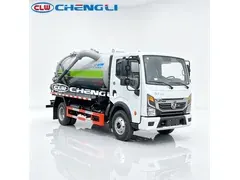 Dongfeng 5,000 L |
Dongfeng 4×2 | Local rounds with a nearby discharge point | Long trips to a distant treatment plant | From USD 17,000 |
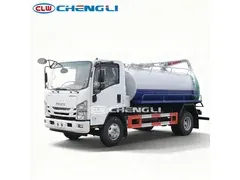 Isuzu 6,000 L |
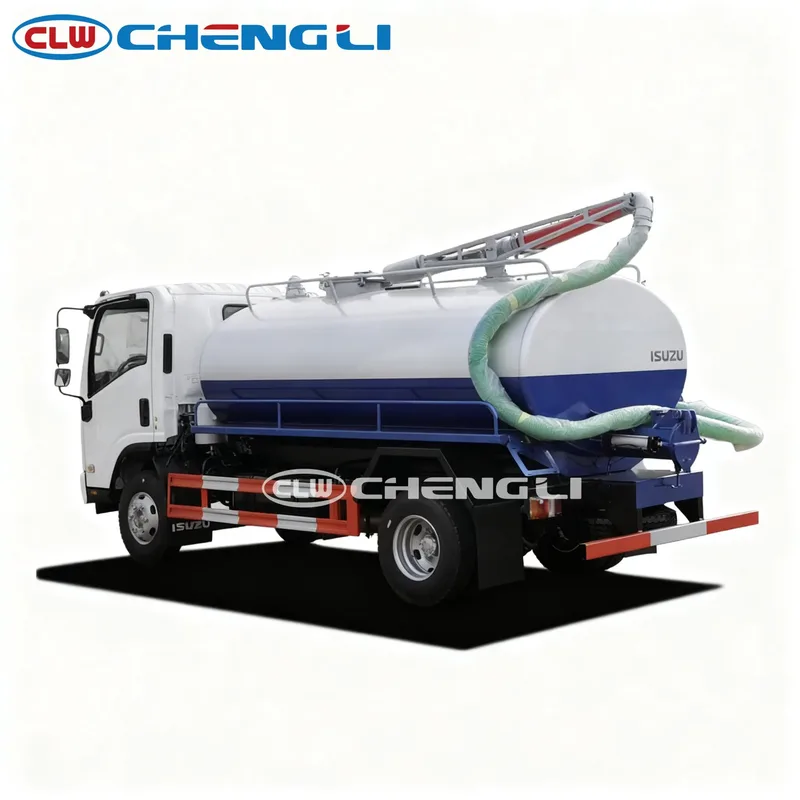
Isuzu 4×2 | Scheduled town collection and several smaller stops | Long discharge runs make extra trips costly | From USD 16,000 |
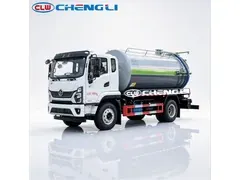 Shacman 12,000 L |
Shacman 4×2 | Higher-volume rounds with suitable road access | Tight sites, soft ground or restrictive axle limits | From USD 23,000 |
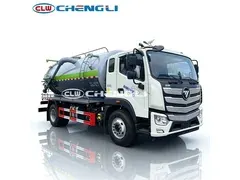 Foton 13,800 L | Foton 4×2 | High-volume collection with suitable route and discharge access | Restricted turns, axle limits or low-volume rounds | From USD 22,000 |
Usable load depends on the rated payload and your route limits. Browse the exhauster truck range to compare the configurations.
Get exhauster truck size advice on WhatsApp
Estimate complete trips per shift
Divide the working shift by the time for one complete cycle, then round down to a whole trip. A cycle includes travel to and from the discharge point, time at the collection stops and time to unload. Subtract breaks and predictable delays from the available shift time, or include delays in the cycle, once only.
Assume an eight-hour working shift, a full tank each trip and a 25 km round trip at 30 km/h, with 50 minutes of driving per trip. Allow 40 minutes for positioning, loading and discharge for the Isuzu and 70 minutes for the Shacman, assuming the larger load needs more stops. That gives five complete 90-minute cycles or four complete 120-minute cycles respectively. Using the tank sizes in this example gives 30,000 L and 48,000 L per shift.
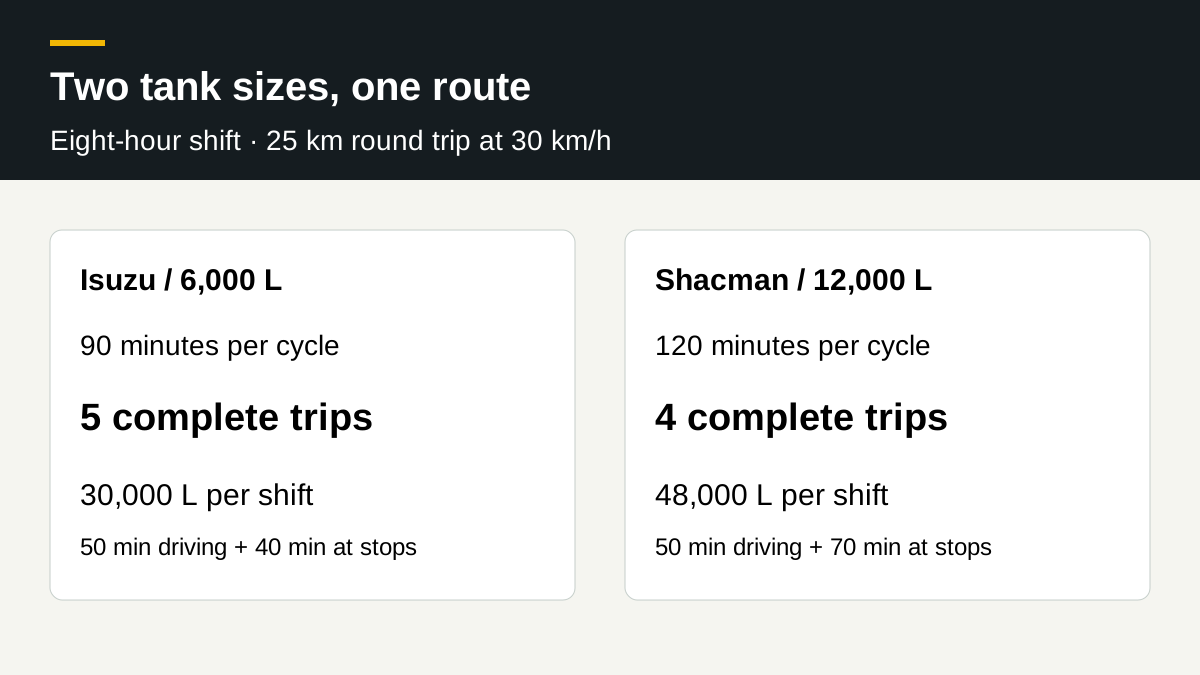
Use your usable load and cycle time to estimate daily output for your route.
If the crew serves several small stops per load, include travel between stops, hose setup at each pit and the time needed to leave each site safely. If the plant has a fixed intake window, fit the unloading times inside it. A bigger tank adds value when you can collect more in the same cycle without running into the legal load limit or missing the discharge window.
Bigger tanks bring weight and access trade-offs
Fuel, crew and carried equipment use part of the vehicle’s payload. Sewage and sludge density also affects the load represented by each litre. Include the normal material and equipment in the vehicle specification.
Also consider where the truck will be when it is loaded. A route can be easy on the way in and difficult on the way out after rain or with a full working load. A larger build can need extra room to turn, more space to set up the hose and firmer ground around the pit. If those constraints apply at most stops, compare a smaller working load and an extra discharge run before choosing a larger tank.
Match the chassis and equipment to the tank
Choose the chassis, vacuum system and hose around the same collection work. The Dongfeng suits local rounds with a nearby discharge point. The Isuzu suits scheduled town work with several small stops. The Shacman and Foton offer larger tanks for longer discharge routes where road access and the legal working load support a larger build.
The vacuum pump, hose bore, hose run and lift height help determine how long the crew spends at each site. Tell us where the truck can park, the distance to the pit and the material it will collect. We use those details to select the equipment for your offer and specify the proposed pump and hose together with the tank. Include the requested steering configuration in the brief. For a Kenyan road vehicle, use the Kenya buying guide and specify right-hand drive. If the job includes clearing blocked pipes as well as removing waste, compare a combined jetting and suction truck.
Which model fits your job?
- Town collection operator: compare the Dongfeng exhauster for short rounds, with tank and access dimensions set in your quote.
- County or water utility: compare the 6,000 L Isuzu for a scheduled service covering several stops per trip.
- Mine or construction camp: compare the Shacman 12,000 L or Foton 13,800 L for higher-volume collection and longer discharge routes with suitable access.
Once you have a shortlist, use our Price List and the East Africa landed-cost guide to build the budget.
Frequently asked questions
What tank size suits narrow town streets?
Start with the smallest usable load that covers your regular round. Compare completed vehicle dimensions, turning space and the parking position at the pit along with the tank size.
How many septic tanks can one load empty?
Divide the usable working load by the volume removed at each stop. Round down for stops of similar size. If they differ, add the planned volume of each stop until you reach the working load.
Should I buy two small trucks or one large truck?
Two smaller trucks can cover separate routes at the same time. One larger truck can reduce discharge trips on a single high-volume route. Compare crew availability, access and the time per cycle.
Time your route, measure your access and tell us what you collect in a typical shift. We can work through the tank and chassis specification with you. See our Buyer’s Guide for the wider procurement process.