
CLW / Blog
Mobile Fuel Bowser Guide: Capacity, Dispensing and Bowser vs Tanker
Choose between a bowser and a tanker, calculate fleet fuel demand and compare the dispensing equipment and truck sizes for your site.
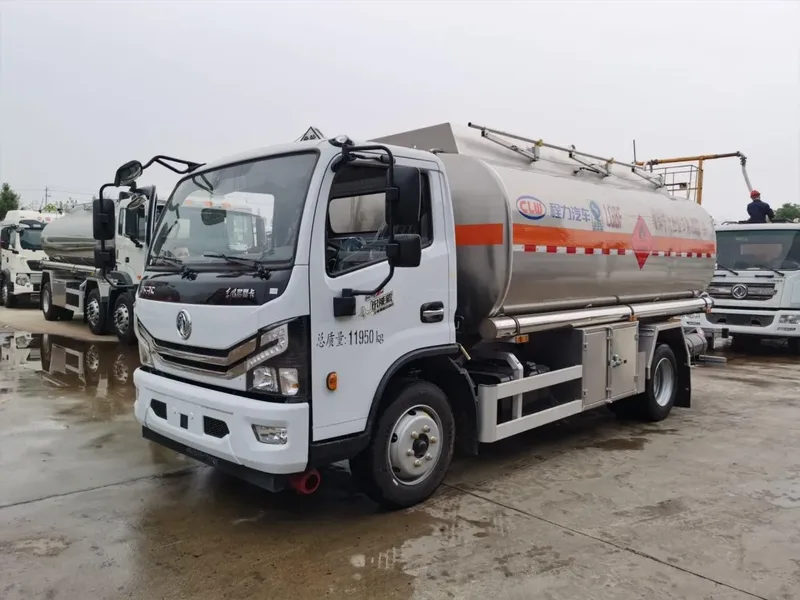
Quick answer
A mobile fuel bowser brings fuel to machinery and dispenses it on site; a fuel tanker mainly carries bulk fuel between depots and receiving tanks. Our fuel bowsers range from 5,000 to 30,000 litres, with starting prices from USD 15,000. Choose around the number of machines, their actual fuel use per shift and the area the truck must cover. Then match the pump, meter, hose and compartments to that job.
Fuel bowser vs fuel tanker: which do you need?
Choose by the delivery task, because tank size alone does not distinguish the two vehicles. A mine contractor refuelling excavators needs a dispensing arrangement at the machine. A distributor supplying a storage installation needs a bulk-transfer arrangement matched to its receiving connection.
| What to compare | Mobile fuel bowser | Fuel transport tanker |
|---|---|---|
| Main purpose | Refuel individual vehicles and machinery | Move fuel between bulk storage locations |
| Example capacities | 5,000–30,000 L | 10,000 L Dongfeng and 27,000 L HOWO |
| Equipment to specify | Pump, meter, hose reel and nozzle | Transfer system, discharge connections and compartment arrangement |
| Typical buyer | Contractor with machines working across a site | Operator replenishing depot or customer storage |
| See models | fuel bowser for sale | fuel tanker truck |
For bulk deliveries, compare the 10,000 L Dongfeng 4×2 or 27,000 L Sinotruk HOWO 8×4. For machinery refuelling, compare the bowsers later in this guide. For refuelling machines, choose a bowser with a pump, meter and hose reel.
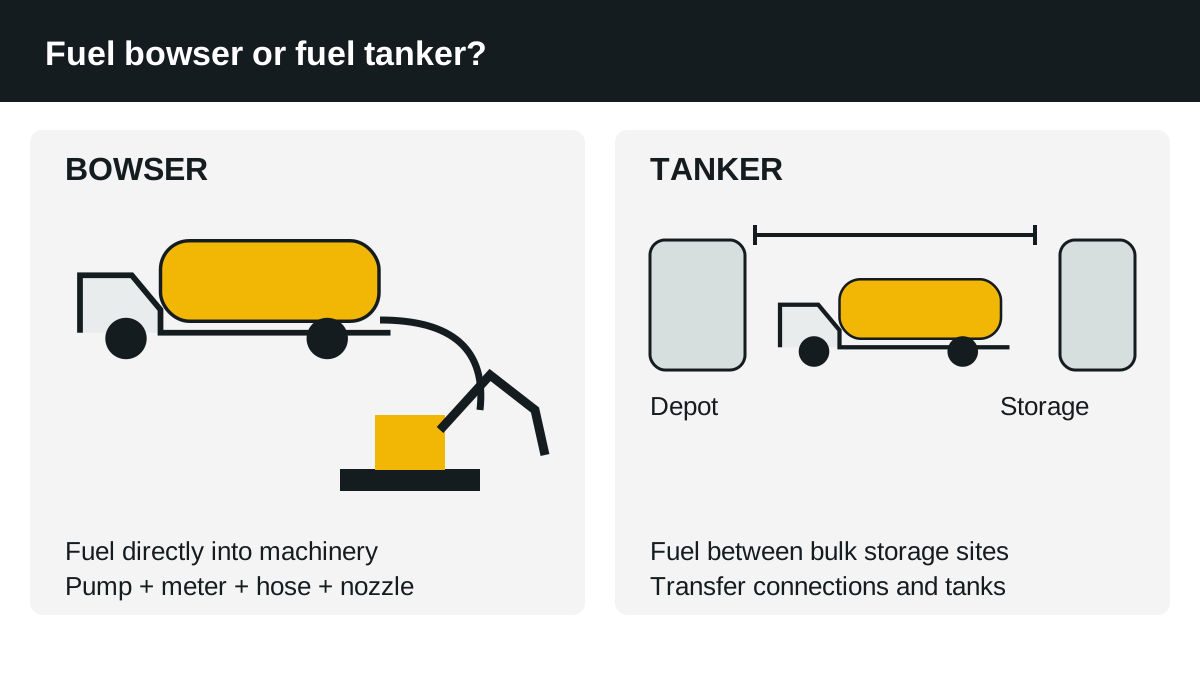
When comparing fuel bowser vs fuel tanker offers, describe the receiving equipment first. We can build the written offer around that duty and state the tank, compartments and dispensing equipment being supplied. If one truck must perform both duties, include both connections and operating requirements in the brief.
How big should your fuel bowser be?
Size the usable working load against the fuel your machines actually consume. For a first estimate:
Complete shifts per load = usable fuel volume ÷ (number of machines × litres per machine per shift), rounded down.
For example, 15 machines using 250 L each need 3,750 L per shift. With the 12,750 L Dongfeng bowser, 12,750 ÷ 3,750 = 3.4. That covers three complete shifts, using 11,250 L and leaving 1,500 L.
Use the volume you can actually dispense, after your operating reserve.
Longer travel to replenish fuel makes capacity more useful, provided the loaded truck can reach the work area. For machinery spread across separate work fronts, two smaller vehicles can serve different locations at the same time. Compare access, staffing and replenishment time before selecting one large tank.
Plan diesel bowser capacity around each machine’s location, actual demand and refuelling window, including the return journey to replenish.
How long does a refuelling round take?
Estimate each stop from fuel volume, delivered flow and handling time. This example assumes a delivery rate of 60 L/min at the nozzle, serving one machine at a time.
| Step | Calculation | Planning estimate |
|---|---|---|
| Dispense 250 L | 250 ÷ 60 | About 4.2 minutes |
| Positioning, required bonding/earthing and hose handling | Assumed allowance | 6 minutes |
| Total per machine | 4.2 + 6 | About 10.2 minutes |
| Fifteen machines | 15 × 10.2 | About 153 minutes, or 2.5 hours |
Add travel between machines, queueing and replenishment time to the round.
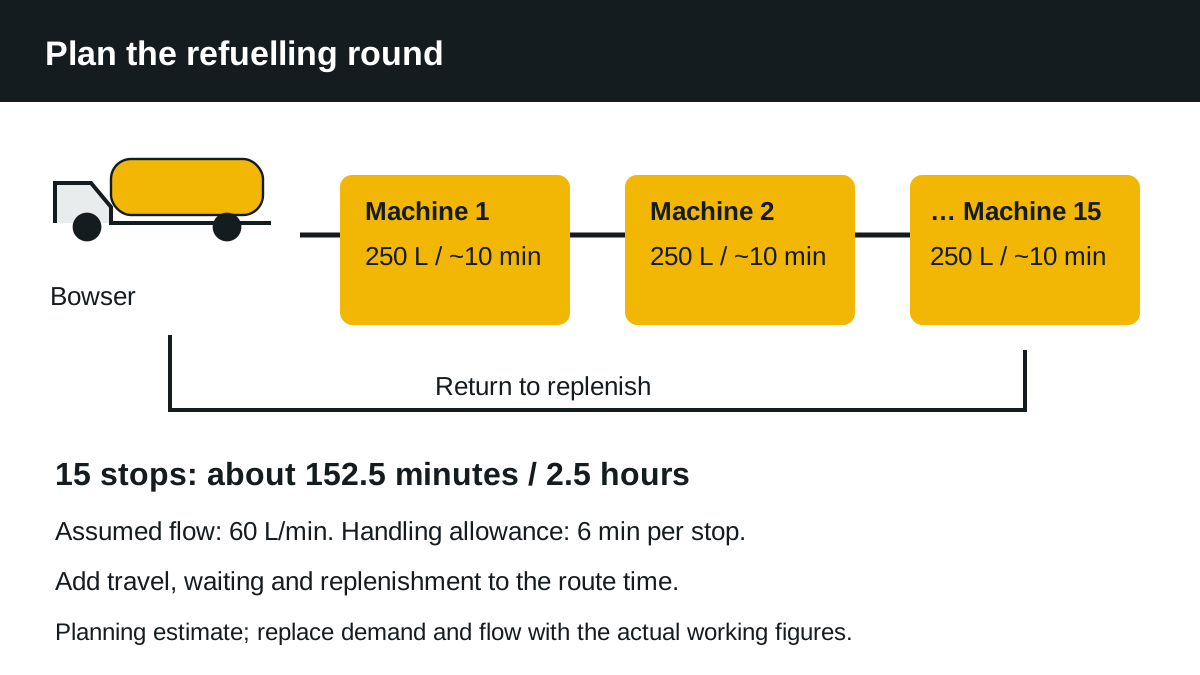
Tell us how many machines you refuel, how far apart they are and how much hose reach you need.
Discuss your refuelling round on WhatsApp
Dispensing equipment and safety features
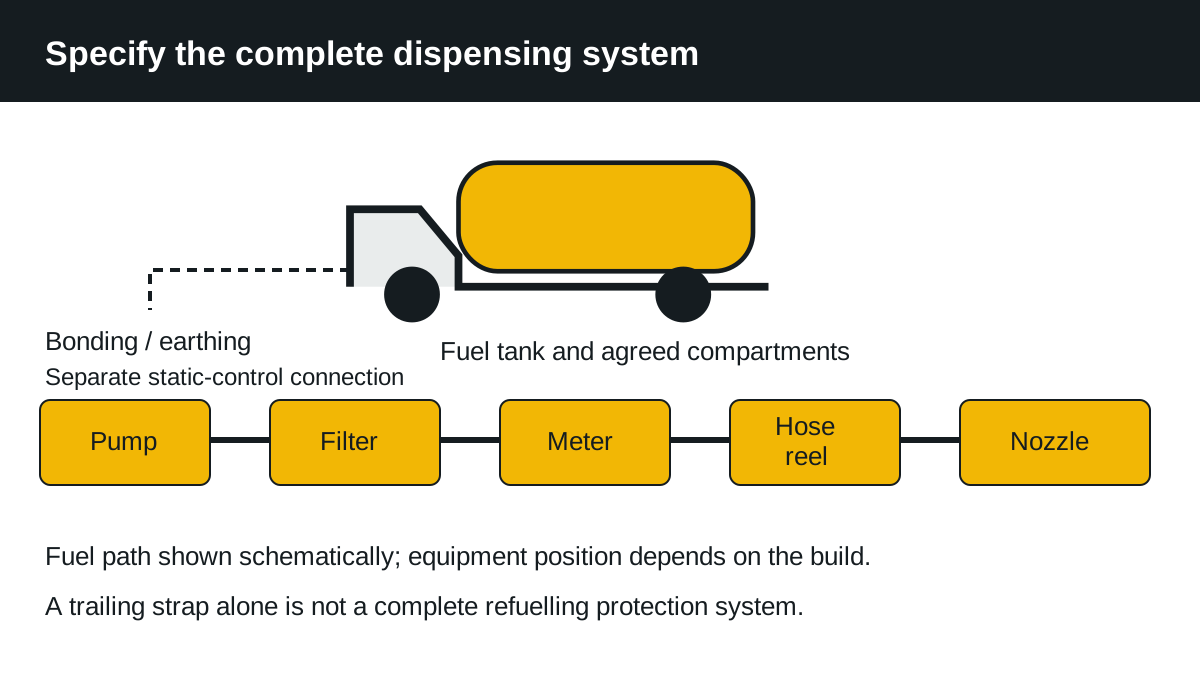
Choose the pump, meter, filter, hose and nozzle as one set.
Pump. Choose a pump that can deliver the required nozzle flow with your selected fuel and hose length.
Flow meter. The meter measures each delivery. Specify the display, logging and calibration documents you need.
Filter. A filter helps keep contaminants out of the receiving equipment.
Hose reel and nozzle. Choose a hose that reaches the machine from the parking position and a nozzle that fits the receiving tank.
Compartments and tank material. Choose compartment sizes for your delivery quantities and materials suited to the fuel.
Safety equipment. Bonding and earthing help control static charge, as explained in the UK HSE guide to earthing. An emergency shut-off stops fuel flow. Overfill protection helps prevent spills. Extinguishers are for initial fire response. A spark arrestor helps limit sparks from the exhaust. We list the agreed safety equipment in the offer.
Compare our mobile fuel bowsers
Compare the tank size, build and starting price for each model.
| Model | Tank | Chassis and drive | Tank and equipment | Typical work | Starting price |
|---|---|---|---|---|---|
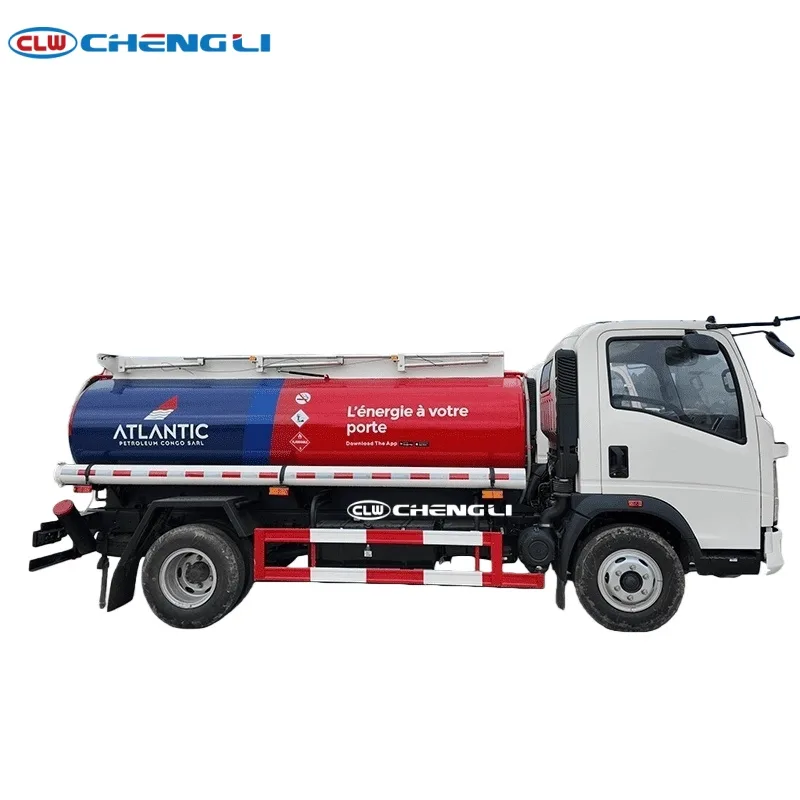 5,000 L Fuel Bowser Truck Sinotruk HOWO 4×2 |
5,000 L | Sinotruk HOWO 4×2 | Q235 carbon steel tank | Farm and generator rounds | From USD 15,000 |
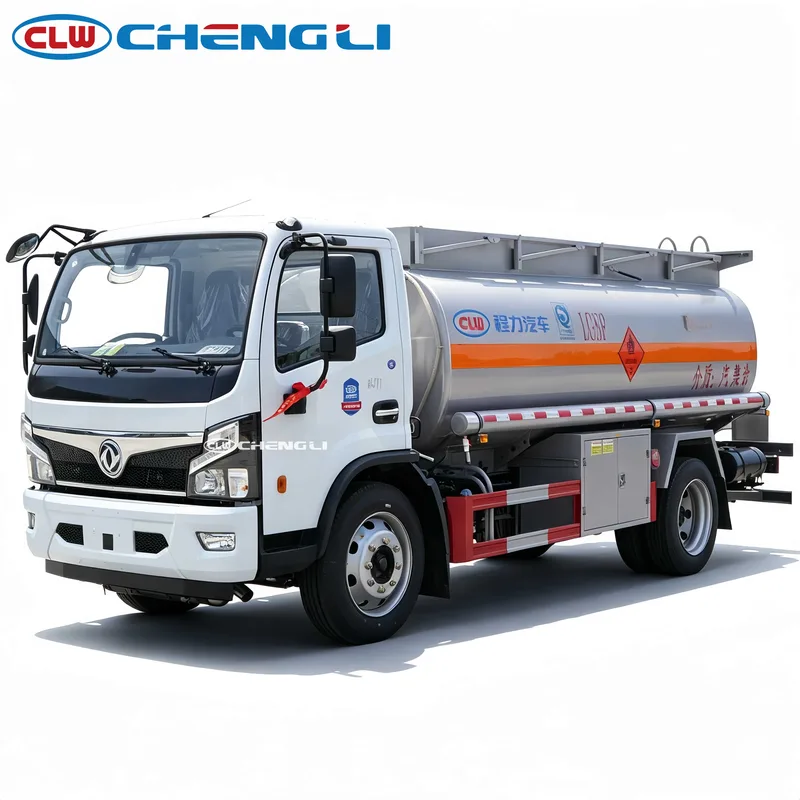 9,000 L Fuel Bowser Truck Dongfeng 4×2 |
9,000 L | Dongfeng 4×2 | 80/60 fuel pump. Carbon steel, aluminium alloy or stainless steel tank options | Road and building sites | From USD 19,000 |
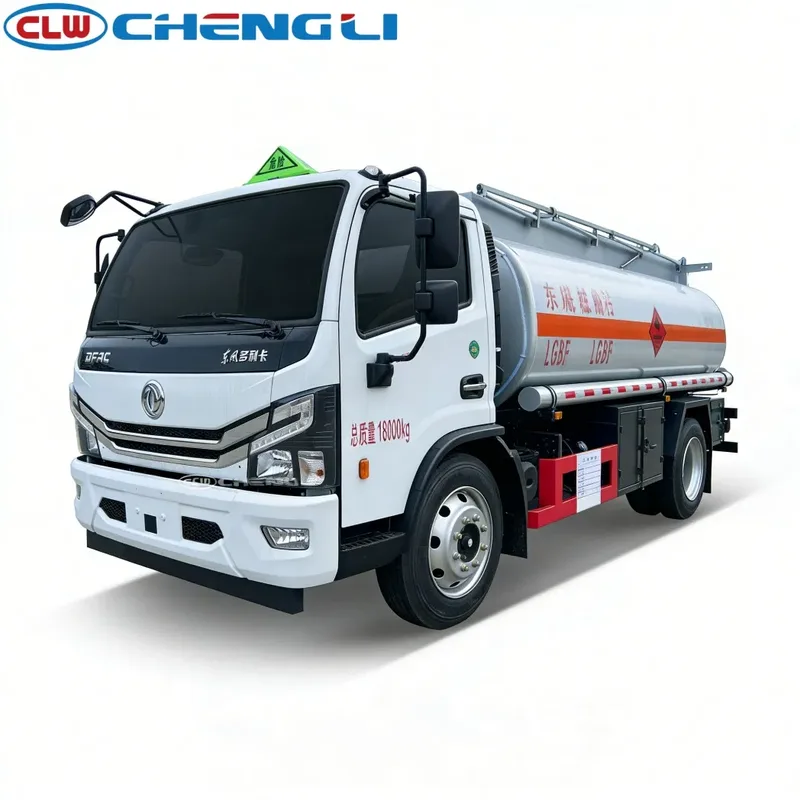 9,900 L Fuel Bowser Truck Dongfeng 4×2 |
9,900 L | Dongfeng 4×2 | Q235 carbon steel tank | Local rounds with higher demand per trip | From USD 20,000 |
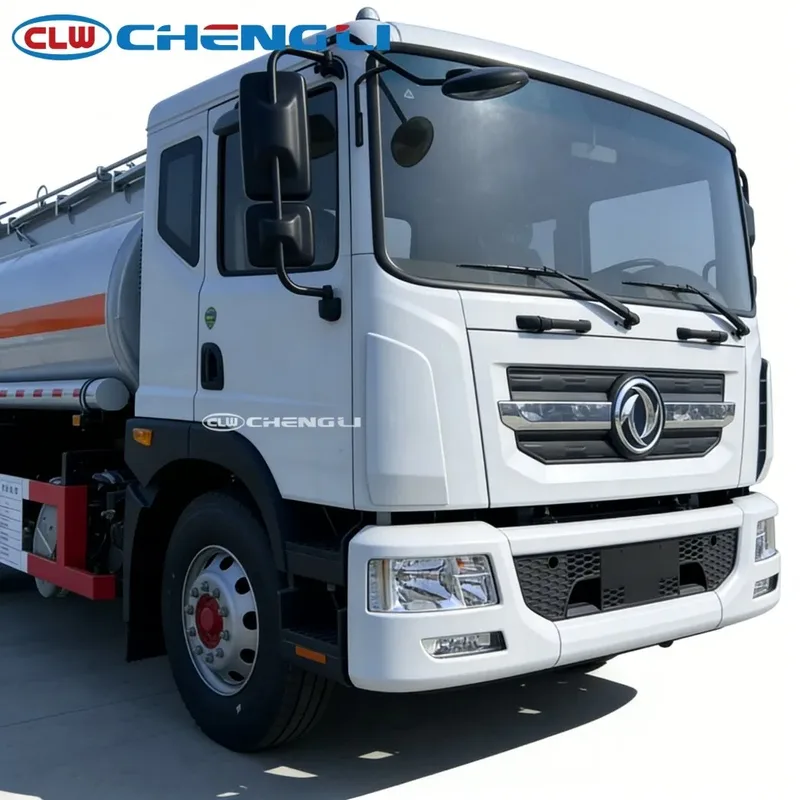 12,750 L Fuel Bowser Truck Dongfeng 4×2 |
12,750 L | Dongfeng 4×2 | Q235 carbon steel tank with fuel pump | Larger working fleets | From USD 28,000 |
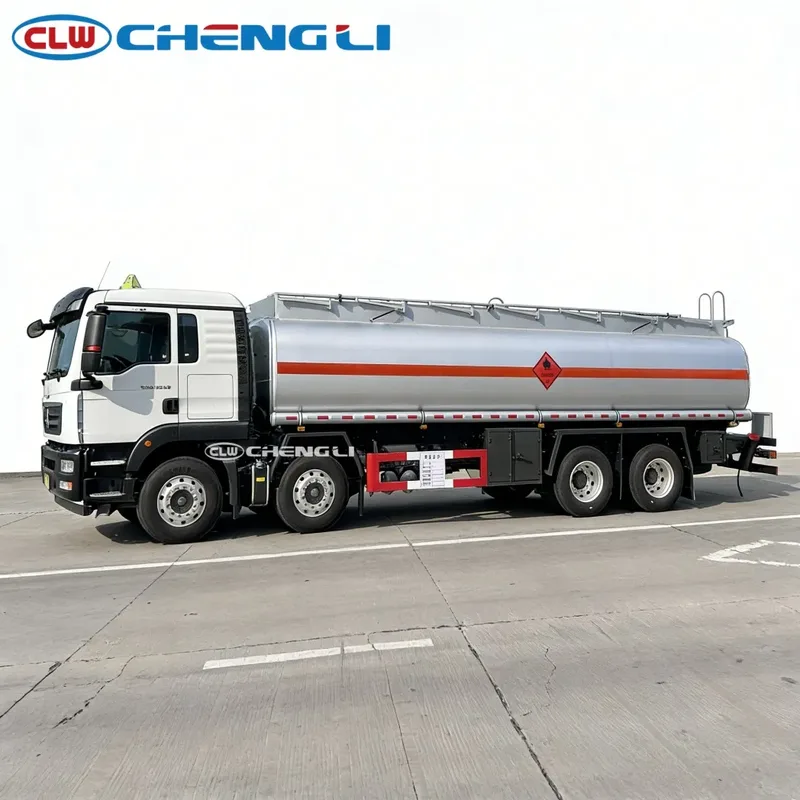 30,000 L Fuel Bowser Truck Sinotruk HOWO 8×4 |
30,000 L | Sinotruk HOWO 8×4 | Q235 carbon steel tank with fuel dispenser | High-volume sites with suitable access | From USD 45,000 |
Starting prices are for the base vehicle. Freight, clearance and delivery are quoted separately for your destination.
Browse all fuel bowser models or see the price list.
Operating and import notes
Confirm the licences and permits for fuel transport and site dispensing with the regulator in your country; the activity and operating location determine what you need. For Kenya, consult EPRA’s petroleum licence and permit guidance. Your clearing agent should establish the vehicle-category import requirements; see our Kenya market guide. For steering and warranty information, see our Buyer’s Guide.
Which model fits your job?
Mine or quarry: compare the 12,750 L Dongfeng 4×2 for a working fleet or the 30,000 L Sinotruk HOWO 8×4 for a larger fleet or a central refuelling point. When choosing a fuel bowser for mining, include gradients, loaded access and replenishment distance. For haul-road watering, see our water bowser capacity guide.
Road or construction contractor: compare the 9,000 L Dongfeng 4×2 against the fuel needed at each work front. Plan the stops around machine availability and the changing location of the works.
Farm, power station or camp: compare the 5,000 L Sinotruk HOWO 4×2 when its usable load meets the scheduled machinery or generator demand. Include access to each receiving tank and the required hose connection.
Why buyers choose CLW
Chengli Group was founded in 2004 and has 14 production bases, more than 13,000 employees and exports to more than 50 countries and regions. We support factory visits, video inspections and inspections by a buyer-appointed third party against the agreed build. Our guide to buying a truck from China explains the supplier and specification checks. For the wider cost structure, use our East Africa landed-budget guide alongside a fuel-vehicle quotation.
Frequently asked questions
What is the difference between a fuel bowser and a fuel tanker?
A bowser dispenses fuel into machinery or vehicles. A tanker mainly transfers bulk fuel between storage locations. Specify the receiving task and equipment, because capacity ranges overlap.
What size fuel bowser does a mine site need?
Multiply the number of machines by each machine’s fuel use per shift, then allow for replenishment time and usable load. The 15-machine example needs 3,750 L per shift. With 12,750 L available to dispense, three complete shifts use 11,250 L and leave 1,500 L.
Can a fuel bowser carry both diesel and petrol?
Separate compartments can keep loads apart, but the tank, outlets and dispensing circuits must be specified for the intended fuels. We define the permitted fuel service and compartment arrangement for the selected build.
How accurate is the flow meter on a fuel bowser?
Accuracy depends on the selected meter. We include its accuracy specification and calibration documents in the offer.
Which fuel pump is fitted to the 9,000 L Dongfeng fuel bowser?
The 9,000 L Dongfeng 4×2 fuel bowser is equipped with an 80/60 fuel pump. See the 9,000 L Dongfeng fuel bowser.
Send your fuel bowser requirements on WhatsApp
Prefer email? Request a fuel bowser quote. Include your fuel type, machines to refuel, work area, steering, quantity and destination.